




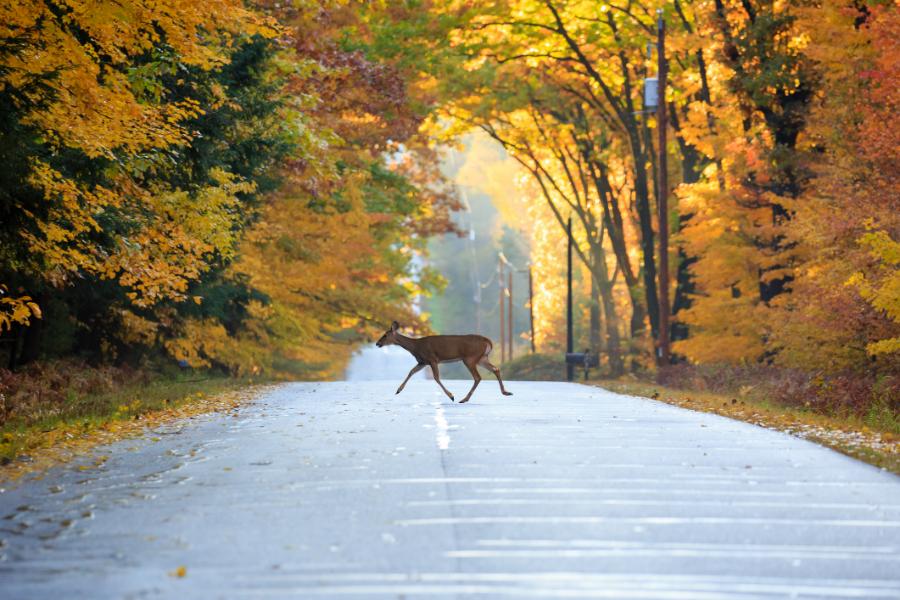
In Bayfield County, deer tend to be the more routine issue for homeowners. But there are also other species to take into account, from black bears to beavers and porcupines.
Moving to Bayfield County is an easy yes for buyers drawn to quiet surroundings and a closer connection to nature. Lake Superior, dense woods, and wide-open land are part of the setting people come home to every day.
But it’s not just people that call this place home. Deer and foxes are common sightings, and depending on where you live, black bears and wolves may be part of the mix as well. Living with wildlife is part and parcel of homeownership in this part of Wisconsin.
This guide will walk you through everything you need to know about wildlife in Bayfield County and how to live with them in harmony.
KEY TAKEAWAYS
|
Table of Contents:
- Types of wildlife common in Bayfield County, WI
- How to handle bear sightings
- What to know about deer and wolves
- Small wildlife can cause big problems too
- How to protect your property without harming wildlife
- Keeping pets safe around wildlife
- FAQs about living with wildlife in Bayfield County
- Find your Bayfield County home with Broad Street Brokers
Types of wildlife common in Bayfield County, WI
| Species | What to expect | When you’ll see them |
| Black bears | Common in northern Wisconsin and often drawn by food-related attractants such as bird feeders, trash, and grills. | Spring through fall. Bears may occupy dens as early as October and remain there into April. |
| White-tailed deer | A routine sight along roadsides, yard edges, and open areas. They are often the first large animals new residents notice. | Year-round, with peak movement at dawn and dusk. |
| Gray wolves | Part of the northern Wisconsin ecosystem, but not a regular yard sighting for most homeowners. More often, they register through tracks, reports, or howling than through a close encounter. | Year-round, sightings increase in remote, wooded areas |
| Wild turkeys | Travel in flocks, often foraging near wooded edges and rural clearings. | Year-round, depending on habitat and cover |
| Beavers | Most relevant for waterfront or wetland properties because they build dams and lodges that can alter water flow. | Year-round near ponds, streams, wetlands, and protected shorelines |
| Porcupines | Present in northern Wisconsin and most relevant on wooded properties, where they can strip bark from trunks and branches and cause visible tree damage. | Year-round, with damage often easiest to spot in winter and early spring. |
| Fishers | Present in Wisconsin and historically associated with the state’s wooded areas. They are carnivorous mammals in the weasel family and are known to prey on squirrels and porcupines. | Year-round, mainly in wooded areas rather than as a routine backyard sighting. |
| Bald eagles | A local presence along Lake Superior and the Apostle Islands, where nesting has rebounded strongly. | Possible year-round, but winter visibility depends on open water because many northern birds move south in search of it. |
How to handle bear sightings
Bayfield County is part of Wisconsin bear country, so the goal is not to panic at the idea of a sighting. The species residents are most likely to encounter is the American black bear, which is also the only bear species found in Wisconsin. Despite the name, black bears are not always jet black; some appear brown or cinnamon.
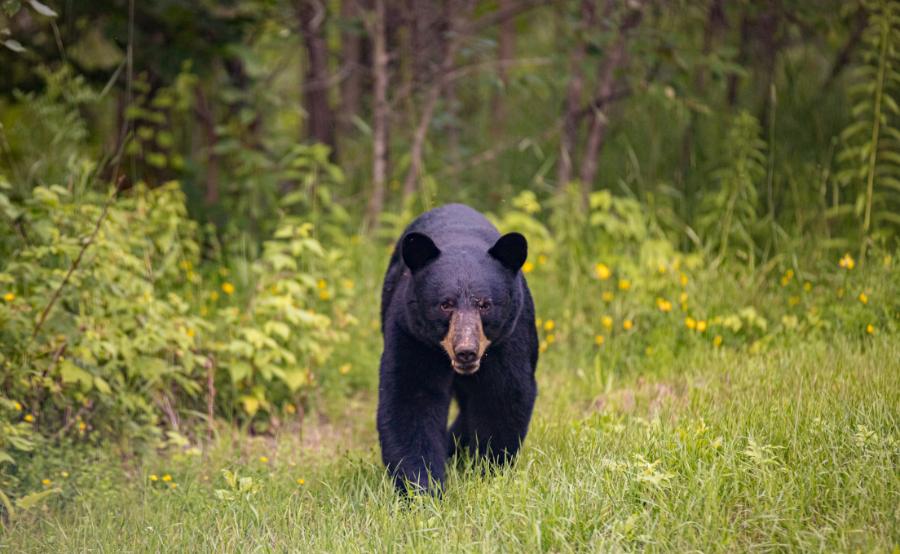
Don’t leave your food and trash out in the open, as the area is a prime habitat for bears.
Remove what attracts bears
The most effective way to reduce bear activity around the house is to deal with food odors. Secure garbage and recycling, keep pet food indoors, clean grills after use, and avoid storing scented items outside. Bears have a powerful sense of smell, and once they find an easy food source, they may return to the same area.
Take down bird feeders when bears are active
In spring and fall, bird feeders often become one of the biggest attractants for bears, especially when natural food sources are limited. What begins as a simple backyard habit can unintentionally bring wildlife closer to homes.
Many residents choose to remove feeders early in the season or hang them well away from structures and trees, recognizing that small adjustments during these months can significantly reduce bear activity around the property.
Know how to respond
Most sightings are brief. If you come across a bear in your yard or near the house:
- Do not run.
- Make yourself look larger.
- Use a firm, loud voice, and clap or make noise.
- Back away slowly while giving the bear a clear path to leave.
- Never approach the bear.
- Do not try to intervene if a pet is interacting with a bear.
Do not run. Make yourself look larger, use a loud voice, clap, or make noise, and back away slowly while giving the bear room to leave. Never approach it, and do not try to break up a fight between a pet and a bear.
From indoors, making steady noise can help encourage the bear to leave. Outside, it is important to remain composed, avoid running, and slowly increase distance while always giving the animal a clear path to move away.
When to call for help?
If a bear is repeatedly returning to your property, damaging structures, or creating an ongoing problem, the Wisconsin Department of Natural Resources (DNR) directs residents to USDA Wildlife Services. For northern Wisconsin, the listed numbers are 800.228.1368 and 715.369.5221.
What to know about deer and wolves
In Bayfield County, deer tend to be the more routine issue for homeowners. Wolves belong in the conversation too, but usually as a matter of prevention rather than frequent close-up sightings. Here’s what to take note of.
Expect regular deer activity
Deer are a steady presence across Wisconsin, often moving through yards, roadside edges, and the transition zones where forest meets residential areas.
They are most active in the early morning and evening, which is why they show up so often at the exact times drivers and dog walkers are out. Around the home, the usual problems are browsing damage and sudden crossings nearby, not dramatic encounters.
Concerned about deer encroaching on your landscaping? The University of Wisconsin Extension notes that no plant is completely deer-proof and that deer preferences vary by area. A more defensible approach is to use a mix of plants deer usually do not favor and to protect vulnerable trees or plantings when needed
Drive carefully in deer country
Wisconsin recorded 17,432 deer crashes in 2024, and state guidance says crashes tend to peak in October and November, with another spike in May and June. Deer are also most active around dawn and dusk.
If a deer moves into the road:
- Slow down and scan both sides of the road.
- If you see one deer, expect more.
- If a collision is unavoidable, brake firmly and stay in your lane. Do not swerve.
- After a crash, get the vehicle off the road if you can, call law enforcement, stay buckled inside. Avoid approaching the animal, as injured deer can behave unpredictably.
Wolves are not unusual sightings
Gray wolves remain part of northern Wisconsin’s wildlife mix, but Wisconsin DNR says wolves normally avoid people. So for homeowners, it’s more a matter of not creating conditions that draw wolves (or the animals they follow) to your home.
Some essential tips to keep in mind:
- Do not feed deer near the house.
- Do not leave pet food or table scraps outside.
- Keep dogs leashed or within sight and sound of people on walks.
- Avoid late-night bathroom breaks in dark, open areas unless the space is fenced or well lit.
For those with hobby livestock or small acreage setups:
- Install secure fencing, ideally tall and reinforced or electric where appropriate.
- Bring smaller livestock into enclosed shelters at night.
- Maintain regular checks for signs of activity such as tracks or droppings.
Small wildlife can cause big problems too
Not every wildlife issue in Bayfield County involves a large animal. Some of the most persistent property problems come from smaller species, especially on wooded lots or near water. For homeowners, the real concern is usually not dramatic encounters. It’s slow, expensive damage to trees, shorelines, outbuildings, or the house itself.
Beavers can alter a property
For properties near water, beavers can become a real maintenance issue. Dams may change water levels, flood low-lying areas, and affect culverts, driveways, or shorelines. Tree loss is another common problem.
If beaver activity is damaging the property, it is worth checking Wisconsin DNR guidance before taking action, since dam removal and in-water work can trigger permit requirements in some situations.
Wrapping tree bases with wire mesh helps prevent chewing, while flow-control devices can manage rising water levels. Regularly walking the property allows you to spot early signs of dam activity or shifting water patterns.
Porcupines can cause major damage to trees
Porcupines are not exactly dangerous animals, but they can do real damage on wooded properties. Their bark feeding can injure or kill trees, and the damage often becomes easiest to spot in winter or early spring, when stripped areas stand out more clearly.
For homeowners with tree cover, this is one of those problems that tends to build quietly over time rather than announce itself all at once.
Squirrels and rodents can be home maintenance headaches
Once squirrels and rodents find access to an attic, crawl space, shed, or woodpile, they can damage insulation, wiring, and stored items. The most practical defense is basic prevention: seal gaps, reduce easy shelter near the house, and keep food and trash secured so the property is less appealing as a nesting site.
How to protect your property without harming wildlife

Planting native species like wild bergamot in your hedges is an easy, non-destructive way to prevent animals from getting into your property.
In Bayfield County, protecting your home goes hand in hand with respecting the surrounding ecosystem. Below are some helpful tips to protect your property without harming wildlife.
Install appropriate fencing
If fencing is necessary, it is better to protect specific spaces — gardens, young trees, or livestock areas — than building barriers in the entirety of your property.
For larger rural parcels, USDA Natural Resources Conservation Service guidance on wildlife-friendly fencing recommends designs that keep the top wire at about 40 to 42 inches or lower, use a smooth bottom wire, and leave roughly 16 to 18 inches of clearance at the bottom so wildlife can pass with less risk of injury or entanglement.
Use landscaping to your advantage
Strategic landscaping for wildlife can discourage animals from approaching the home.
Trimming brush, clearing debris, and maintaining open space near structures reduces cover. Native plants and thorny shrubs add a subtle buffer, while removing fallen fruit and yard waste eliminates common attractants.
Treat trash, feeders, and pet food as attractants
Food sources are a primary draw for wildlife. In Bayfield County, garbage management matters as much as landscaping. Wisconsin DNR advises residents to remove bird feeders, rinse food containers, keep meat scraps in the fridge or freezer until garbage day, store trash in a closed building if possible, keep pet food inaccessible, and clean grills after use. Bears are highly food-motivated and often return to places where they have found an easy meal.
Use lighting sparingly
Avoid turning your whole property into a brightly lit perimeter. On a wooded or rural lot, the better approach is to light only the areas that truly need it, such as entry points, steps, and driveways.
Downward-facing, fully shielded fixtures keep light directed where it is useful, while motion sensors or timers help limit unnecessary illumination. That approach improves visibility for residents without spilling excess light across the yard or into the surrounding landscape.
What to check before you buy or build
|